
Hearing Aid, Phonak, Phonak Products, Signia, Signia Products, Widex, Widex Products
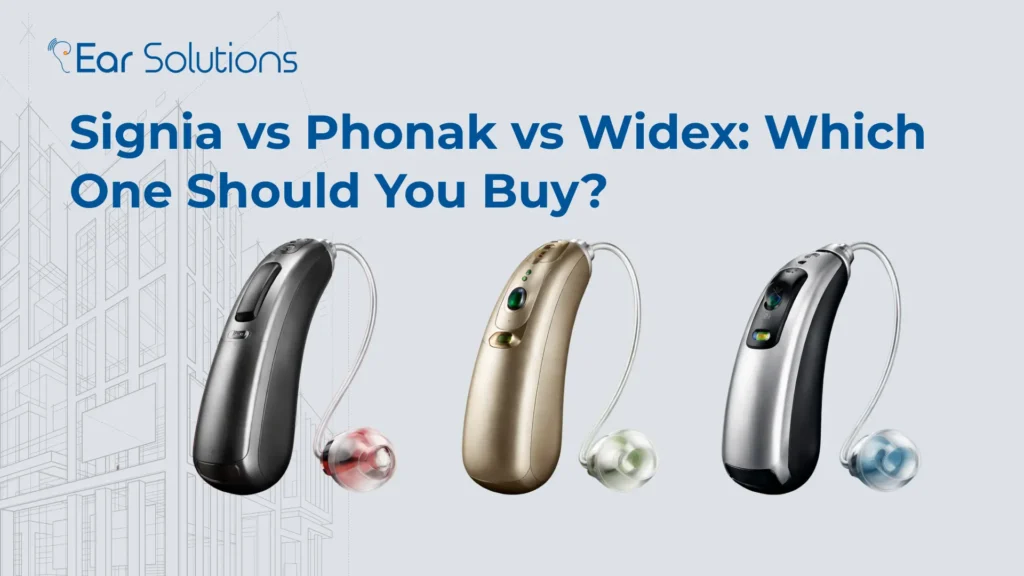
Signia vs Phonak vs Widex: Which One Should You Buy?
Apr
Introduction
So you’ve decided to finally do something about your hearing. Good. That’s honestly the hardest part for most people. But now you’re comparing three names, Signia vs. Phonak, vs. Widex, and wondering what on earth the difference is. They all look similar. They all claim to be the best. And they all cost a significant amount of money.
Here’s the truth: all three are genuinely good hearing aid brands. But they’re not the same. Each one has a different strength, a different sound philosophy, and a different kind of person they suit best.
Summary
This blog breaks it down simply and honestly. No technical overload. No brand bias. Just a real comparison to help you make a confident decision, especially keeping in mind the cost of hearing aids in India and what you actually get for your money.
We will compare Signia vs. Phonak vs. Widex across sound quality, technology, comfort, connectivity, and price in the Indian market, so you can walk into a hearing clinic knowing exactly what you want.
Key Takeaways
- All three brands are world-class; the difference is in their approach to sound.
- Signia suits first-time users and people who want natural, comfortable sound
- Phonak suits active users who need reliability across every environment
- Widex suits people who find hearing aids sound artificial or processed
- The cost of a hearing aid in India varies widely; brand, model, and technology level all play a role
- Professional fitting matters more than brand loyalty
Table of Contents
Why Are These Three Brands Always Compared?
Because they consistently show up at the top of every hearing care professional’s recommendation list, and they each represent a slightly different philosophy about how hearing aids should work.
- Signia hearing aid focuses on making hearing feel natural and effortless, especially your own voice.
- Phonak focuses on versatility and performance across every possible listening environment.
- Widex focuses on making sound feel as pure and organic as possible, almost like you’re not wearing a device at all.
That difference in philosophy is what makes comparing them genuinely useful, because depending on what bothers you most about your hearing loss, one of these will suit you significantly better than the others.
Signia Hearing Aid: What Makes It Different?
If you’ve ever tried a hearing aid and hated the way your own voice sounded, hollow, echoey, like you’re speaking inside a tin can, Signia was designed with exactly that problem in mind.
Their Own Voice Processing technology handles your voice separately from all other sounds. The result is that your voice sounds like your voice. Natural, familiar, comfortable. For first-time users, this alone can make the transition dramatically easier.
Signia hearing aids also perform well in noisy environments. The Augmented Xperience platform separates the sound you want to focus on; speech, speech or conversation, from the background noise around it. In a busy Indian household, a crowded market, or a noisy office, that distinction matters a lot.
The app control is clean and intuitive. Rechargeable options are widely available. And the designs are slim and discreet, nothing that draws attention.
Best for: First-time hearing aid users, people bothered by unnatural voice sound, everyday Indian home and social environments.
Phonak Hearing Aid: Who Is It Really Built For?
Phonak is probably the most well-known hearing aid brand in the world, and its reputation is well earned.
What Phonak does better than almost anyone is performance across wildly different environments. Their AutoSense OS technology automatically detects whether you’re in a quiet room, a noisy street, a moving car, or a crowded restaurant, and adjusts the hearing aid settings accordingly without you touching anything.
For someone whose day takes them through multiple environments, commuting, meetings, markets, and family gatherings, that automatic adaptability is genuinely valuable.
Phonak hearing aids also lead in connectivity. Their Roger technology, which uses a small microphone accessory, is considered the gold standard for hearing speech in extremely noisy environments. If you attend lectures, large family functions, or work in loud settings, this is a real advantage.
Durability is another strong point. Phonak’s rechargeable models carry high water and dust resistance ratings; important in India’s climate, especially during monsoon months.
Best for: Active users, frequent travellers, people in consistently noisy environments, and those who want a hearing aid that adapts without any manual input.
Widex Hearing Aid: Why Do Audiophiles Love It?
Widex has a very specific and loyal following, and the reason comes down to one thing. Sound quality.
Most hearing aids process sound digitally, and that processing takes a tiny fraction of a second. For speech, you barely notice. But for music, ambient sound, or anything with natural texture, that delay creates a processed, artificial quality that many users find uncomfortable.
Widex’s PureSound technology reduces that processing delay to nearly zero. The result is a sound that feels organic and real. Music sounds like music. Rain sounds like rain. Conversations feel natural rather than amplified.
If previous Widex hearing aids have felt mechanical or harsh to you, or if you’re someone who loves music and can’t bear the idea of it sounding distorted, Widex is worth trying seriously.
The designs are also among the most elegant in the industry; slim, lightweight, and built with genuine attention to comfort for all-day wear.
Best for: Music lovers, people sensitive to artificial sound quality, and long-time hearing aid users upgrading from older devices.
Signia vs Phonak vs Widex: Features Comparison (2026)
| Feature | Signia | Phonak | Widex |
|---|---|---|---|
|
Sound Philosophy
|
Natural and comfortable
|
Adaptive and powerful |
Pure and organic |
|
Best Environment |
Home, social settings
|
All environments
|
Quiet to moderate noise
|
|
Own Voice Comfort
|
Excellent |
Good |
Good |
|
Background Noise Handling
|
Very good
|
Excellent |
Good |
|
Connectivity
|
Strong |
Excellent
|
Good |
|
Music Quality
|
Good |
Good |
Excellent |
|
First-Time User Friendly |
Very high |
High |
Moderate
|
|
Durability
|
High |
Very high |
High |
What Is the Cost of a Hearing Aid in India?
This is the question most people really want answered, and the honest answer is that it varies quite a bit.
The cost of a hearing aid in India depends on three things: the brand, the technology level, and where you buy it.
Entry-level digital hearing aids from all three brands typically start somewhere in the range of ₹15,000 to ₹30,000 per device. Mid-range models with better noise processing and connectivity features fall between ₹40,000 and ₹80,000. Premium models, the flagship rechargeable BTE devices with full AI processing and app connectivity, can range from ₹90,000 to ₹1,80,000 or more per device.
Keep in mind that most people need two hearing aids, one for each ear, so the total investment is typically doubled.
What matters most is not picking the cheapest option or the most expensive one; it’s finding the right technology level for your degree of hearing loss and your daily lifestyle. A mid-range device that’s properly fitted will outperform a premium device that isn’t.
So Which One Should You Actually Buy?
When it comes to buying hearing aids of good quality in India, it becomes important to consult a professional audiologist at Ear Solutions and take a hearing test for free to know the level of your hearing loss.
Choose Signia if you’re buying your first hearing aid, if your own voice sounds unnatural has put you off hearing aids before, or if your daily life is mostly home, family, and social settings.
Choose Phonak if you’re active, if your day takes you through many different sound environments, if you want the most reliable all-conditions performance, or if you attend large gatherings and noisy functions regularly.
Choose Widex hearing aids if sound quality is your top priority, if you’re a music lover, or if you’ve worn hearing aids before and found them harsh or artificial-sounding.
All three are available across India through certified hearing care centres. Whichever brand you lean toward, always insist on a proper trial period before committing.
Conclusion:
Comparing Signia vs. Phonak vs. Widex are all genuinely excellent hearing aids. The best one isn’t the most expensive or the most advertised; it’s the one that fits your hearing loss, suits your lifestyle, and feels comfortable enough that you actually wear it every day.
Use this comparison as your starting point. Then visit our qualified hearing care professional at Ear Solutions, try the shortlisted options properly, and make the decision based on how they feel in your real daily life, not just on a spec sheet.
Better hearing is absolutely worth investing in. In India in 2026, the options have never been better.
FAQs
Not necessarily better, just different. Phonak suits active, on-the-go users. Signia suits first-time users and those who prioritise natural sound comfort. Both are excellent.
All three brands build devices designed to last five to seven years with proper care. Regular servicing and cleaning make a significant difference to longevity.
Yes. Widex devices are available through certified hearing aid centres across major Indian cities, including Delhi, Mumbai, Bangalore, and Chennai.
For a solid mid-range device with reliable noise processing and connectivity, budget between ₹50,000 and ₹80,000 per device. This range gives you genuinely useful technology without paying for premium features you may not need.
Always from a certified hearing care professional. Hearing aids need to be programmed to your specific hearing loss; buying online without a professional fitting significantly reduces how well they work.

Prerna Singh
Audiologist, Ear Solutions
Prerna Singh is an Audiologist at Ear Solutions, focused on delivering compassionate, patient-centric hearing care. She works closely with individuals to understand their hearing concerns and guide them toward practical, technology-driven solutions that improve everyday communication and confidence.
At Ear Solutions, Prerna supports the organization’s long-standing mission of transforming lives through better hearing. She is committed to hearing awareness, accurate assessments, and continuous patient support-ensuring every individual receives the care they need to hear better and live better, in line with the vision of #AbSabSunenge.