

Hearing Aid
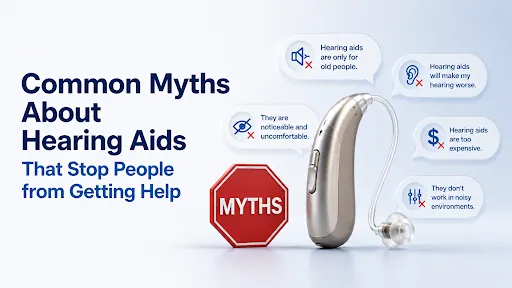
Common Myths About Hearing Aids That Stop People from Getting Help
Aug
Ask around, and you will find that almost everyone knows someone who needs a hearing aid but keeps putting it off. Not because they cannot afford one, and not because they do not notice the hearing loss, but because of things they have heard from friends, family, or the internet that simply are not true.
Hearing aids today are nothing like the bulky, whistling devices people remember from decades ago. Yet old myths continue to stop people from getting the help they need, sometimes for years. In this blog, we will break down the most common hearing aid myths, back each one with facts, explain the real hearing aid benefits, and cover how hearing aids work, so you can make a decision based on truth, not outdated assumptions.
Summary
Most hesitation around hearing aids comes from myths rather than facts. People assume hearing aids are only for the elderly, that they make you look weak, that they are too expensive, or that they will not really help. In reality, hearing loss affects people of all ages; modern hearing aids are compact and often invisible, prices span a wide range to fit different budgets, and untreated hearing loss tends to cause far more problems than wearing a device ever would. Understanding how hearing aids actually work and what genuine hearing aid benefits look like can help more people take the first step toward better hearing instead of avoiding it out of fear or misinformation.
Key Takeaways
- Hearing loss is common across all age groups, not just among older adults
- Modern hearing aids are small, often invisible, and nothing like older bulky models
- Ignoring hearing loss can affect memory, mood, relationships, and safety over time
- Hearing aid prices range widely, so there are options across most budgets
- A hearing test takes only a short time and gives clarity instead of guesswork
- Understanding how hearing aids work removes most of the fear around trying one
Table of Contents
Why Myths Around Hearing Aids Exist
Hearing aid technology has changed dramatically over the past two decades, but public perception has not always kept up. Many people still picture the large, visible devices their grandparents wore, or they repeat things they heard secondhand without ever checking the facts. This gap between old assumptions and current technology is exactly why so many people delay getting help, sometimes for five to seven years after they first notice signs of hearing loss.
Common Hearing Aid Myths vs Facts
Here is a simple, fact-based breakdown of the most common myths people believe about hearing aids.
| Myth | Fact |
|---|---|
|
Hearing aids are only for old people |
Hearing loss can affect people of any age, including children, teenagers, and working professionals, often due to noise exposure, genetics, or medical conditions |
|
Hearing aids are big, bulky, and visible |
Many modern hearing aids are extremely small, fitting discreetly behind or inside the ear, with some models being nearly invisible to others |
|
Hearing aids are too expensive for most people |
Prices range widely, with basic models starting around ₹25,000, making it possible to find an option across most budgets |
|
Wearing a hearing aid makes you look weak or old |
Choosing to hear clearly and stay engaged in conversations is a sign of self-awareness, not weakness |
|
Hearing aids fully restore hearing like glasses restore vision |
Hearing aids significantly improve hearing clarity, but they work by amplifying and processing sound, not by curing hearing loss |
|
One hearing aid is enough even if both ears are affected |
For hearing loss in both ears, two hearing aids generally provide better sound direction, clarity, and long-term ear health |
|
Hearing aids are uncomfortable to wear all day |
Most users adjust within a few weeks, and modern lightweight designs are built for all-day comfort |
|
Mild hearing loss does not need treatment |
Even mild, untreated hearing loss can strain the brain over time and gradually affect memory and focus |
|
Hearing aids cause more harm than help |
Properly fitted hearing aids, prescribed after a professional hearing test, are safe and are designed specifically to support hearing health |
|
You will need a hearing aid forever once you start wearing one |
Hearing aids do not increase hearing loss; they simply support the hearing you already have, based on your current needs |
How Do Hearing Aids Work?
Understanding how hearing aids work helps clear up a lot of confusion and fear around using one. The process is actually quite simple.
- A tiny microphone inside the device picks up sound from your surroundings
- A small processor chip analyses and cleans up the sound, reducing background noise and enhancing speech
- The processed sound is amplified based on your specific hearing loss pattern, as measured during your hearing test
- A small speaker delivers the clear, adjusted sound directly into your ear canal
- Many modern devices also connect via Bluetooth, allowing direct streaming from phones, televisions, and other devices
This entire process happens in real time, so there is no noticeable delay between a sound happening around you and you hearing it clearly.
Real Hearing Aid Benefits Backed by Facts
Understanding genuine hearing aid benefits can help replace fear with confidence. Here are facts worth knowing.
- Better communication with family, friends, and colleagues, reducing misunderstandings in daily conversations
- Improved safety, since hearing aids help you notice important sounds like alarms, vehicles, or someone calling your name
- Reduced mental strain, since the brain no longer has to work overtime trying to fill in missing sounds
- Better performance at work, especially in meetings, calls, and group discussions
- Stronger social connection, since untreated hearing loss often leads people to withdraw from conversations and social settings.
- Support for long-term brain health, since several studies have linked untreated hearing loss with faster cognitive decline in older adults.
Signs You May Need a Hearing Aid
- Frequently asking people to repeat themselves
- Turning the television or phone volume higher than others prefer
- Struggling to follow conversations in noisy places like restaurants or markets
- Feeling tired after long conversations or meetings
- Family members mentioning that you seem to miss things they say
If any of these feel familiar, a simple hearing test can give you clear answers instead of continued guesswork.
Why Delaying Treatment Makes Things Harder
Many people wait years before addressing hearing loss, often because of the myths covered above. But delaying treatment tends to make adjustment harder later, since the brain gradually becomes less practised at processing certain sounds when they are missing for a long time. Addressing hearing loss earlier, even when it feels mild, generally leads to a smoother and faster adjustment period once you do start using a hearing aid.
How to Find the Best Hearing Aids for Your Needs
- Start with a proper hearing test conducted by a certified audiologist
- Discuss your daily lifestyle, whether you need something for a quiet home setting or a noisy workplace
- Compare a few trusted brands rather than settling on the first option you see
- Ask about trial periods, so you can experience real-world performance before committing
- Check warranty coverage and aftercare support, since fine-tuning after fitting matters for long-term comfort
At Ear Solutions, our certified audiologists guide you through this entire process, helping you find the best hearing aids based on facts and your actual hearing needs, not outdated assumptions.
Conclusion
Most of the hesitation around hearing aids comes down to myths that no longer match reality. Hearing loss affects people of all ages; modern devices are compact and comfortable; prices span a wide range of budgets, and the real risks lie in ignoring hearing loss rather than treating it. Understanding how hearing aids work and the genuine benefits they offer can make the decision to seek help feel a lot less intimidating.
If you or someone you know has been putting off a hearing test because of something they heard rather than something a professional confirmed, now is a good time to get the facts straight. A simple hearing test at Ear Solutions can replace uncertainty with clarity and clarity with better hearing.
FAQs
No, this is one of the most common hearing aid myths. Hearing loss can affect people of any age due to noise exposure, genetics, infections, or medical conditions.
Not anymore. Many modern hearing aids are small, discreet, and in some cases nearly invisible, fitting comfortably behind or inside the ear.
A hearing aid picks up sound through a microphone, processes and amplifies it based on your specific hearing loss, and delivers clearer sound through a small speaker into your ear.
Key hearing aid benefits include better communication, improved safety awareness, reduced mental fatigue, stronger social connection, and support for long-term brain health.
No, this is a myth. Properly fitted hearing aids do not damage hearing; they simply support the hearing you currently have based on your hearing test results.
This depends on your hearing loss level and lifestyle, which is best determined through a professional hearing test rather than guessing based on price or features alone.
Not at all. A standard hearing test is quick, painless, and gives clear, accurate results that guide the right treatment or device recommendation.

Prerna Singh
Audiologist, Ear Solutions
Prerna Singh is an Audiologist at Ear Solutions, focused on delivering compassionate, patient-centric hearing care. She works closely with individuals to understand their hearing concerns and guide them toward practical, technology-driven solutions that improve everyday communication and confidence.
At Ear Solutions, Prerna supports the organization’s long-standing mission of transforming lives through better hearing. She is committed to hearing awareness, accurate assessments, and continuous patient support-ensuring every individual receives the care they need to hear better and live better, in line with the vision of #AbSabSunenge.