
Hearing, Hearing Aid, Hearing Care Tips
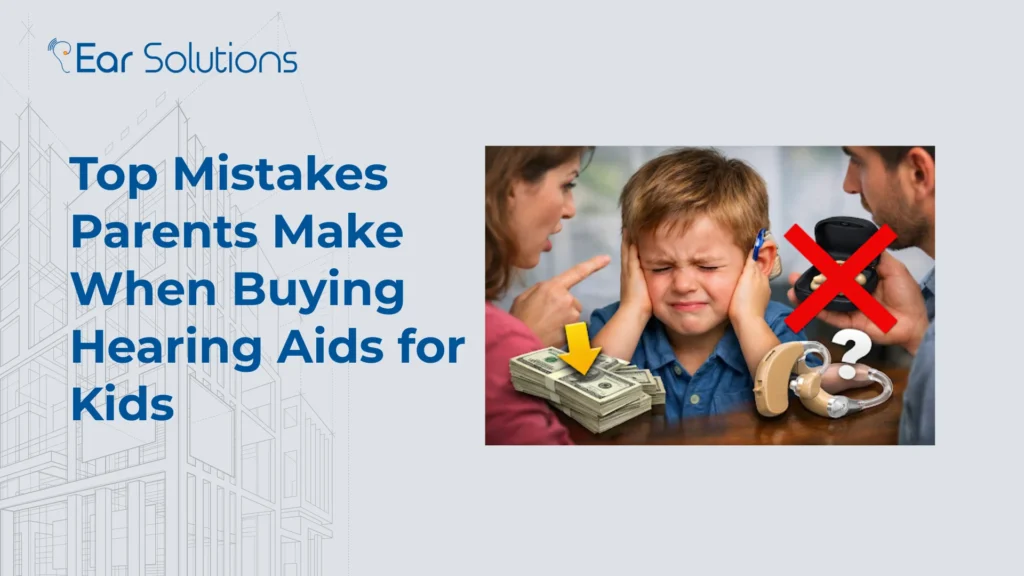
Top Mistakes Parents Make When Buying Hearing Aids for Kids
Introduction
When parents find out their child has hearing loss, the first instinct is to act fast. You want your child to hear your voice clearly, keep up in school, laugh at the right moments, and never feel left out of conversations happening around them. So you start searching, hearing aids for kids, hearing aid cost comparisons, invisible hearing aids for children, best audiologist. The research begins at full speed.
And somewhere in that rush to do the right thing quickly, mistakes happen. Not because parents don’t care, but because they care so deeply that decisions get made in a hurry, based on the wrong priorities. This blog walks you through the most common mistakes families make when buying hearing aids for children and, more importantly, how to avoid them.
Summary
Buying hearing aids for a child is one of the most important decisions a parent makes for their child’s development and quality of life. The most common mistakes, prioritising price, skipping professional assessments, choosing invisible options without clinical advice, and neglecting follow-ups, all come from good intentions without complete information. Understanding what hearing aid prices in India reflect in terms of technology, knowing the real story behind invisible hearing aids for children, and finding the best audiologist in India for your child’s specific needs are the steps that make a real difference. The technology available today is genuinely impressive. Getting the most out of it comes down to the decisions made around it.
Key Takeaways
- Always get a full audiological assessment before buying any hearing aid for your child.
- Clinical suitability matters more than price; fit the right device, not just the most affordable one.
- Invisible hearing aids for children are not always the right clinical choice, especially for younger children.
- The best hearing aids for kids account for real daily environments, including classrooms and social settings.
- Regular follow-up appointments are essential as your child grows and their needs change.
- Involve older children in the decision; their willingness to wear the device consistently matters enormously.
- The best audiologist for your child will have paediatric experience, strong diagnostic capability, and a genuine commitment to aftercare.
Table of Contents
Why Getting This Decision Right Matters
A child’s hearing needs are fundamentally different from an adult’s. The early years are critical for speech development, language acquisition, and learning. When hearing loss is poorly managed during those years, the effects can follow a child well beyond childhood, touching their confidence, their academic performance, and how they connect with people around them.
Getting the right hearing aid for kids, fitted correctly by the right professional, at the right time, isn’t just about better hearing today. It’s about giving your child the strongest possible foundation for everything that comes after. That’s why this decision deserves more than a quick search and a price comparison.
Top Mistakes Parents Make When Buying Hearing Aids for Kids
Putting Price Before Suitability
Cost is a real consideration; nobody pretends otherwise. But choosing a hearing aid primarily because it’s the most affordable option available is one of the most common mistakes parents make. The best hearing aid for kids that isn’t clinically suited to your child’s specific type and degree of hearing loss simply won’t perform well, regardless of its price tag.
What matters far more is whether the device matches your child’s hearing profile and has been properly fitted by a qualified professional. A mid-range device fitted correctly will always outperform an expensive one chosen without proper guidance.
Skipping a Proper Audiological AssessmentBuying a hearing aid without a full diagnostic assessment by the best audiologist in India first is a serious mistake. Children need a comprehensive evaluation to determine the type, degree, and specific frequency range of their hearing loss. Without that information, there is no reliable way to recommend the right device or programme it correctly.
A proper assessment is not a formality; it is the entire foundation on which the right hearing aid recommendation is built. Never skip it.
Chasing Invisible Hearing Aids Without Clinical GuidanceThe appeal of invisible hearing aids for children is completely understandable. No parent wants their child to feel self-conscious. But invisible or deeply canal-fitted devices are not always clinically appropriate for children, particularly younger ones.
Children’s ear canals are still growing, which means deeply fitted devices need frequent remodelling. Smaller devices also tend to offer fewer features and less processing power than behind-the-ear options. In many cases, a behind-the-ear hearing aid is the more practical and effective choice, and today’s models are far more discreet and stylish than most parents expect.
Overlooking Fitting and CalibrationBuying a hearing aid is only half the process. The fitting and calibration, programming the device to match your child’s specific hearing profile, is where the real difference is made. A hearing aid for kids not correctly programmed will not perform the way it should, no matter how advanced the technology inside it.
This is why purchasing from sources that don’t offer professional fitting services is such a significant risk. The device is only as good as the calibration behind it.
Not Thinking About Your Child’s Daily EnvironmentChildren are not sitting in quiet rooms all day. They’re in classrooms with background noise, busy playgrounds, noisy family gatherings, and everything in between. A hearing aid chosen without considering those real-world environments may perform well in a clinic and fall short everywhere else.
Talk to your audiologist specifically about where your child spends most of their time. The best hearing aids for kids in active, noisy settings need strong directional microphone technology, reliable background noise management, and compatibility with classroom audio systems.
Missing Follow-Up AppointmentsA child’s hearing needs change as they grow. Their ear canals change shape. Their listening environments shift. The best hearing aid for kids calibrated perfectly at age five may not be performing the same way at age eight. Regular follow-up appointments are not optional; they’re an essential part of ensuring the hearing aid keeps doing its job properly over time.
Leaving the Child Out of the DecisionOlder children and teenagers especially need to feel some ownership over their hearing aids. A device chosen entirely by parents without any input from the child is far more likely to be resisted or simply not worn. Where age allows, involve your child, ask what feels comfortable, what they notice in different settings, and yes, how the device looks to them. Their buy-in makes a real difference to whether the hearing aid actually gets used every day.
Understanding Hearing Aid Price in India
The right price point for your child depends entirely on their hearing needs and daily lifestyle, not on what happens to be on offer. A straightforward conversation with your audiologist about what level of technology genuinely suits your child’s situation will guide you far better than a price comparison alone ever could.
Hearing aid prices in India vary considerably depending on the brand, technology level, and the features included. Entry-level devices cover basic amplification needs. Mid-range options add better noise management, Bluetooth connectivity, and smarter sound processing. Premium devices bring AI-powered automatic adjustment, advanced speech clarity, and seamless connectivity with phones and other devices.
What’s worth remembering is that a well-fitted, appropriately chosen hearing aid at any price point will serve your child better than the most expensive device bought without proper professional guidance.
Invisible Hearing Aids for Children: Are They the Right Choice?
Invisible or in-canal devices are generally more appropriate for older teenagers and adults with stable ear canal anatomy. For younger children, behind-the-ear models remain the most practical, durable, and clinically effective choice. They’re easier to manage, better suited to growing ear anatomy, and typically offer more processing capability.
Invisible hearing aids for children are a topic that comes up in almost every parent consultation. The desire to protect your child from feeling different is natural and completely valid. But the clinical picture is more nuanced than the marketing often suggests.
The good news is that modern behind-the-ear hearing aids have come a long way in terms of design. They’re slim, lightweight, available in a range of colours, and far less noticeable than older generations of the same style. Many children, when given a choice of colours, actually enjoy personalising their devices.
If your child is older and specifically interested in a less visible option, it’s absolutely worth raising with our audiologist at Ear Solutions; there may be suitable choices depending on their age and hearing profile. But that conversation should always be led by clinical suitability rather than appearance alone.
How to Find the Best Audiologist in India
Finding an audiologist for your child comes down to a few things that genuinely matter. Qualifications come first. Look for the best audiologist in India with a recognised degree in audiology and speech-language pathology, registered with the Rehabilitation Council of India. This is non-negotiable.
Paediatric experience matters just as much. Working with children requires a specific skill set, a different level of patience, and an understanding of how children’s hearing needs differ from adults. Ask directly whether the clinic has dedicated experience with paediatric cases.
Diagnostic equipment is another indicator of quality. Our audiology clinic, Ear Solutions should be equipped for full diagnostic assessments, real-ear measurements, and speech perception testing, not just basic screening.
Finally, think about aftercare. The best audiologists don’t fit a device and move on. They schedule regular follow-ups, remain accessible when questions arise, and treat the relationship with both parent and child as ongoing rather than transactional. For a child, that continuity of care genuinely matters.
Conclusion:
Your child deserves to hear the world clearly, your voice, their teacher, their friends, and the everyday sounds that make childhood what it is. Getting there takes more than finding a device at a good price. It takes the right assessment, the right professional, the right fitting, and the right ongoing support while choosing Hearing Aids for Kids.
If you take one thing away from this, let it be this: slow down enough to do it properly. The care you invest at the beginning pays off in ways that are genuinely hard to put a number on.
FAQs
Hearing aids can be fitted from just a few weeks old. Early fitting is strongly recommended as it directly supports speech and language development.
Most devices last between three and five years, though ear moulds may need replacing more frequently as your child grows.
It depends on their age and hearing profile. Younger children are generally better suited to behind-the-ear models. Your audiologist will advise on what’s appropriate.
Signs include your child turning up the volume on devices, seeming inattentive, or mentioning that something doesn’t sound right. Regular audiologist visits will catch most issues early.
Paediatric experience, proper diagnostic equipment, and a genuine commitment to ongoing aftercare are the three things that matter most.
Prerna Singh
Audiologist, Ear Solutions
Prerna Singh is an Audiologist at Ear Solutions, focused on delivering compassionate, patient-centric hearing care. She works closely with individuals to understand their hearing concerns and guide them toward practical, technology-driven solutions that improve everyday communication and confidence.
At Ear Solutions, Prerna supports the organization’s long-standing mission of transforming lives through better hearing. She is committed to hearing awareness, accurate assessments, and continuous patient support-ensuring every individual receives the care they need to hear better and live better, in line with the vision of #AbSabSunenge.