

Hearing, Hearing Aid, Hearing Care Tips, Invisible Hearing Aid
CIC vs. IIC Hearing Aids in India: Which One Is Truly Invisible?
May
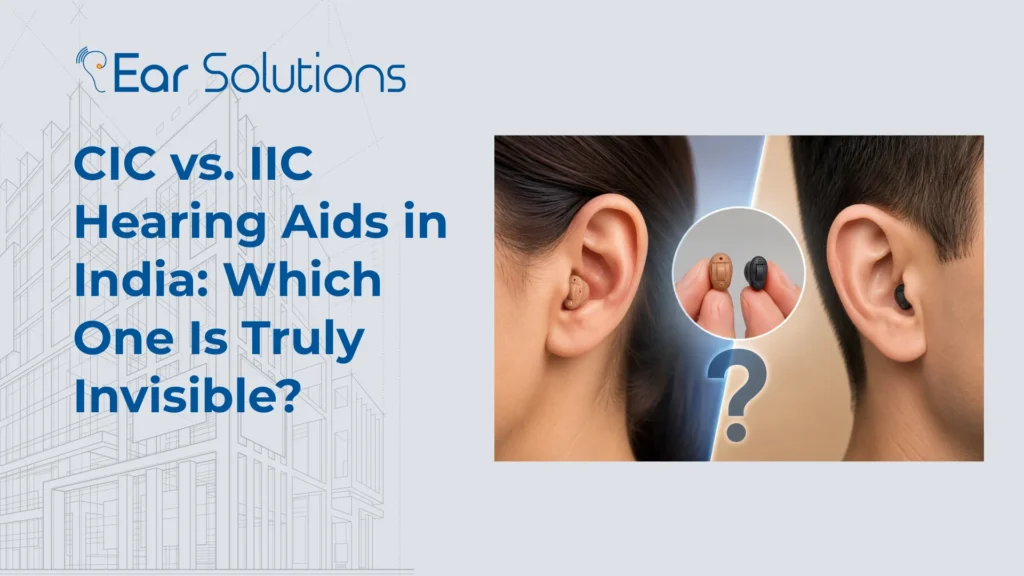
Nobody wants their hearing aid to be the first thing someone notices about them. That feeling is completely valid, and it is exactly why CIC vs. IIC hearing aids have become two of the most searched options across India right now. Both sit inside the ear canal. Both are designed to be discreet. But they are not the same thing, and choosing the wrong one can mean spending a significant amount of money on a device that either does not fit your ear or does not meet your hearing needs. This blog clears up the confusion so you can walk into any hearing aid near me and search with actual clarity about what you are looking for.
Summary
CIC stands for “completely in the canal.” IIC stands for “invisible in the canal.” Both are small canal-based hearing aids, but IIC sits deeper and is genuinely harder to spot. The right choice depends on your degree of hearing loss, the shape of your ear canal, your lifestyle, and your budget. In India, both options are available, but access, pricing, and fitting expertise vary considerably by location and clinic.
Key Takeaways
- IIC hearing aids sit deeper in the ear canal than CICs and are virtually undetectable to others.
- CIC hearing aids are slightly larger but easier to handle and suitable for a wider range of hearing loss levels.
- Not every ear canal is shaped to accommodate an IIC device.
- Both styles require professional fitting and cannot be purchased off the shelf effectively.
- IIC devices generally cost more in India than CIC due to the significant engineering and technology involved.
- Searching for hearing aids near you with a qualified audiologist is the only reliable way to know which one your ear can actually support.
Table of Contents
What Does "Completely in the Canal" Actually Mean
CIC hearing aids are custom-moulded devices that sit entirely within the ear canal. They do not rest on the outer ear or behind it. From a few feet away, most people would not notice them at all.
How Are They MadeAn audiologist takes an impression of your ear canal, and the device is built to match that exact shape. This makes the fit snug, stable, and completely personal to your anatomy.
What They Look Like When WornA small removal cord or handle remains just at the canal opening. This is barely visible in most cases, but it is there, and someone looking closely may notice it.
What Makes IIC Hearing Aids Different
IIC hearing aids take the concept of invisibility one step further. They are placed so deep inside the ear canal that they sit in what is called the second bend of the canal, the curved inner portion that simply cannot be seen from outside at all.
Why They Are Called Truly Invisible
When worn correctly, an IIC device cannot be seen by someone looking directly at your ear from any normal angle. There is no external component, no cord, and nothing resting near the canal opening.
What the Tradeoff Is
Because they sit so deeply, IIC devices are very small. That means smaller batteries, fewer manual controls, and in some cases fewer features than slightly larger devices. The depth also means your ear canal needs to be a specific shape and size to accommodate them safely.
CIC vs IIC: How Do They Actually Compare
Here is a straightforward look at CIC vs. IIC hearing aids, and how these two styles differ across the factors that matter most.
Size and Visibility
CIC devices are small and discreet. IIC devices are smaller still and genuinely invisible. If invisibility is your top priority, IIC has the clear edge.
Ease of Handling
CIC devices are slightly easier to insert, remove, and manage daily. IIC devices sit so deeply that removal requires care and practice, which can be difficult for older adults or those with reduced finger dexterity.
Sound Quality
Both offer good sound quality. IIC devices benefit from a natural positioning that allows the outer ear to help shape and direct sound, which many users find produces a more natural listening experience.
Battery Life
IIC devices use smaller batteries that need more frequent replacement. CIC batteries typically last a bit longer between changes.
Feature Availability
CIC hearing aids can accommodate more features, including Bluetooth in some models. IIC devices, due to their tiny size, often have fewer feature options available.
Who Is a Good Candidate for CIC Hearing Aids
CIC hearing aids work well for a broad range of people. They are a practical choice for those who want something discreet without the fitting restrictions that come with IIC devices.
Hearing Loss Level
CIC devices work best for mild to moderately severe hearing loss. They deliver enough amplification for most everyday situations within that range.
Ear Canal Requirements
Your canal needs to be large enough to house the device comfortably. A professional assessment is always needed to confirm this before purchase.
Lifestyle Fit
If you are active, work in a professional setting, or simply want something manageable day to day, CIC is a reliable and well-proven option for most adults.
Who Should Consider IIC Hearing Aids
IIC devices are not for everyone, but for the right person, and they deliver an experience no other style can match.
When Appearance Is the Priority
If the thought of anyone noticing your hearing aid is a genuine concern, whether for professional reasons, personal confidence, or social situations, IIC addresses that concern more completely than any other style currently available.
Your Ear Canal Needs to Cooperate
Not all IIC hearing aids are deep or straight enough to hold an IIC device safely and comfortably. A thorough canal examination by an audiologist is essential before pursuing this option.
Hearing Loss Range for IIC
IIC devices are suited for mild to moderate hearing loss. Those with severe or profound hearing loss will generally need more amplification than an IIC device can deliver at its size.
What Do CIC and IIC Hearing Aids Cost in India
Hearing aid pricing in India varies based on technology level, device features, and where you get them fitted.
CIC Hearing Aid Price Range
Entry-level CIC hearing aids in India typically start around 25,000 to 40,000 rupees per ear. Mid-range options with better noise reduction sit between 50,000 and 90,000 rupees. Premium CIC devices can go beyond 120,000 rupees per ear.
IIC Hearing Aid Price Range
IIC hearing aid devices generally cost more due to the precision engineering involved. Entry-level IIC options start around 45,000 to 70,000 rupees. High-end models with advanced features can go well above 150,000 rupees per ear.
What Affects the Final Price
Technology generation, warranty terms, aftercare services, and the clinic you visit all influence what you ultimately pay. Government schemes and some insurance plans in India now cover a portion of hearing aid costs, so it is always worth asking your audiologist about available financial support before committing.
How to Find the Right Hearing Aids Near You
Searching for hearing aids near you is often the first step, but knowing what to look for when you arrive at a clinic matters just as much as finding one nearby.
What a Good Clinic Should OfferA reliable audiologist from Ear Solutions will conduct a full hearing test before recommending any device. They should take a proper ear impression for custom devices and offer a trial period so you can test the hearing aid in your actual daily environment before fully committing to it.
Questions to Ask Before BuyingAsk whether aftercare and follow-up adjustments are included. Ask about the warranty period and what it covers. Ask specifically whether your ear canal is suitable for the device being recommended. Do not hesitate to get a second opinion if anything feels rushed or unclear.
Conclusion:
The comparison of CIC vs. IIC hearing aids comes down to one question more than any other: How invisible do you need this to be, and does your ear physically allow for it? CIC hearing aids are discreet, practical, and suitable for a wider range of people. IIC hearing aids are as close to invisible as current technology allows, but come with size limitations, higher costs, and stricter fitting requirements.
Neither is universally better. The right choice is the one that fits your ear, suits your level of hearing loss, and matches the way you actually live. Start with a proper hearing assessment; find a qualified audiologist through a trusted Ear Solutions clinic near you search; and let the clinical picture guide your decision rather than appearance alone.
FAQs
No. Your ear canal must be deep and wide enough. Only an audiologist can confirm this after a proper examination.
They are very discreet, but a small removal cord at the canal opening may be visible up close.
CIC batteries last longer. IIC devices use smaller batteries that need more frequent changing.
Yes, when properly fitted, but most audiologists recommend removing them during sleep to allow the ear to breathe.
Wipe daily with a dry cloth and get regular professional cleaning. Keep both moisture and earwax away from the device at all times.

Prerna Singh
Audiologist, Ear Solutions
Prerna Singh is an Audiologist at Ear Solutions, focused on delivering compassionate, patient-centric hearing care. She works closely with individuals to understand their hearing concerns and guide them toward practical, technology-driven solutions that improve everyday communication and confidence.
At Ear Solutions, Prerna supports the organization’s long-standing mission of transforming lives through better hearing. She is committed to hearing awareness, accurate assessments, and continuous patient support-ensuring every individual receives the care they need to hear better and live better, in line with the vision of #AbSabSunenge.