
Hearing Aid, Invisible Hearing Aid
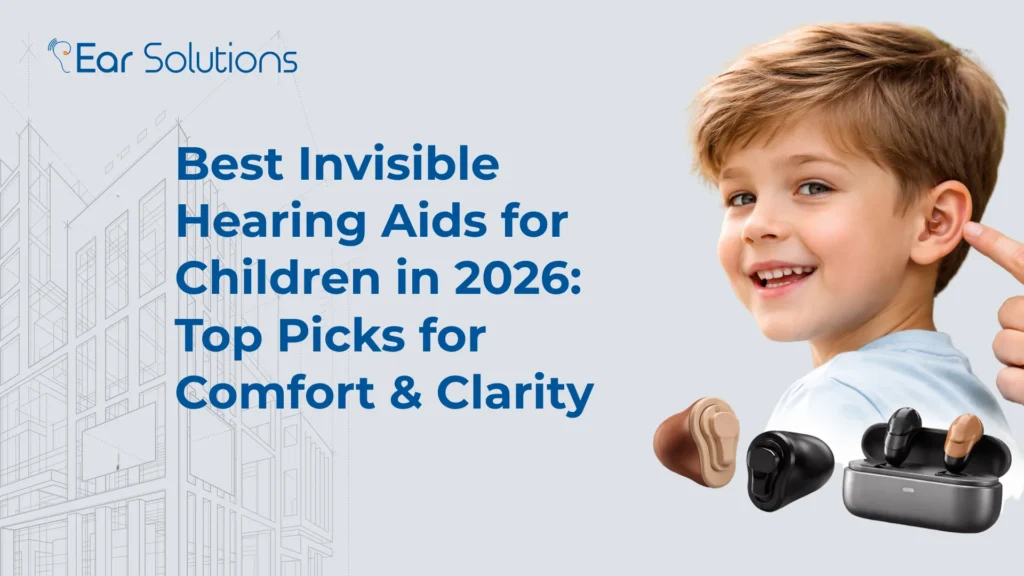
Best Invisible Hearing Aids for Children in 2026: Top Picks for Comfort & Clarity
Introduction:
If your child has been diagnosed with hearing loss, the first thing most parents worry about isn’t just “will this help them hear better?” It’s “Will my child actually wear it?” That’s a completely fair concern. Kids can be self-conscious, especially at school. The good news is that invisible hearing aids for children have come a long way, and in 2026, there are some genuinely impressive, tiny, and effective options that your child won’t dread putting on each morning. This guide breaks it all down in plain, simple language; no confusing medical jargon, just real information you can actually use.
Summary:
Invisible hearing aids are small devices designed to sit deep in or inside the ear canal, making them nearly unnoticeable. For children, these can make a huge difference in confidence and daily comfort. This guide covers what invisible hearing aids are, the best options available in 2026, what they cost, and how to choose a good hearing aid clinic for your child.
Key takeaways:
- Invisible hearing aids sit inside or very close to the ear canal, making them hard to spot.
- They boost confidence in children who worry about being noticed at school or with friends.
- Prices vary widely, from budget-friendly to premium, depending on brand and features.
- Choosing the right hearing aid clinic is just as important as choosing the right hearing aid.
- Not every invisible style suits every child; ear canal size and degree of hearing loss both matter.
Table of Contents
What Are Invisible Hearing Aids?
Invisible hearing devices are exactly what the name suggests: hearing aids so small that you can barely see them, if at all. The most popular type is called IIC, which stands for Invisible-in-Canal hearing aid. These are custom-fit devices that sit deep inside your ear canal. Another common type is CIC, or Completely-in-Canal, which sits a little less deeply but is still very discreet.
Unlike the older, bulkier behind-the-ear (BTE) devices, invisible hearing aids for children are tiny and moulded to fit your child’s specific ear shape. They work by picking up sound, amplifying it, and delivering it directly into the ear canal. Modern versions even come with Bluetooth, rechargeable batteries, and app controls.
Why Children Prefer Invisible Hearing Aids
Let’s be honest, kids notice everything about each other. A child wearing a large, visible hearing device may face questions, teasing, or simply feel different from their peers. This is not a small thing. Studies have shown that children are more likely to wear their hearing aids consistently when the device doesn’t draw attention.
Invisible hearing aids help children feel more included in everyday social settings, classrooms, playgrounds, and birthday parties. When a child doesn’t have to think about “people seeing my hearing aid,” they focus more on living their life. That confidence has a real, lasting impact on learning and social development.
Best Invisible Hearing Aids for Children in 2026
Here are some of the best invisible hearing aids for children in 2026. Always confirm with your audiologist that the specific model suits your child’s degree of hearing loss and ear canal size.
Phonak Lyric (Extended Wear)
The Phonak Lyric is placed deep in the ear canal and can be worn continuously for weeks. It doesn’t need daily removal, which older children and teens especially love. It’s not suitable for very young children, but it works well for school-age kids with mild to moderate hearing loss.
Starkey Evolv AI IIC
Starkey is known for some of the smallest custom IIC devices on the market. The Evolv AI uses artificial intelligence to adapt sound automatically based on the environment, whether your child is in a noisy cafeteria or a quiet classroom. App control is a bonus.
Signia Silk Charge&Go IX
Signia’s Silk range uses a universal sleeve design, meaning there’s no long wait for a custom fit. It’s one of the fastest options to get up and running. The Charge&Go version is rechargeable, which is great for parents who don’t want to deal with tiny batteries constantly.
Widex Moment Sheer IIC
Widex is praised for its natural sound quality. The Widex Moment Sheer processes sound faster than most competitors, reducing the artificial echo that some users experience. Children who are sensitive to sound quality tend to adjust to Widex invisible hearing aids more comfortably.
Oticon Own IIC
The Oticon Own uses “BrainHearing” technology, designed to help the brain process sound with less effort. Less listening fatigue means more energy for learning, something every parent and teacher can appreciate.
Invisible Hearing Aid Prices
Invisible hearing aid prices vary by brand, country, clinic, and the package’s inclusions. Here’s a general breakdown:
| Type / Brand | Approx. Price (Per Ear) | Notes |
|---|---|---|
|
Entry-level CIC
|
₹35,000 – ₹60,000
|
Basic features are good for mild hearing loss
|
|
Mid-range IIC
|
₹70,000 – ₹120,000
|
Bluetooth, better noise reduction
|
|
Premium (Starkey, Widex, Oticon)
|
₹130,000 – ₹250,000
|
AI features, rechargeable, app control
|
|
Phonak Lyric (subscription)
|
₹40,000 – ₹70,000/year
|
Extended wear, replaced by an audiologist
|
Many clinics offer EMI options, and some insurance plans, including government schemes for children, may cover part of the cost. Always ask your clinic about financial assistance before assuming it’s out of reach.
How to Choose the Right Hearing Aid Clinic
The hearing aid clinic you choose matters enormously. Even the best hearing aid won’t help your child if it’s poorly fitted or if there’s no proper follow-up. Here’s what to look for:
First, check whether the clinic has a qualified audiologist, not just a hearing aid dealer. Our audiologists at Ear Solutions have clinical training and can conduct detailed hearing tests, especially for children whose responses during testing can be tricky to interpret.
Second, ask whether the clinic offers pediatric experience. Children require different testing methods and more patience during fittings. A clinic that sees mostly adults may not be the best fit for a 7-year-old.
Third, check what’s included in the price; fittings, fine-tuning sessions, warranty, and repair service all matter. Some clinics offer trial periods, which can be very helpful before you fully commit.
Finally, read reviews and, if possible, talk to other parents. Word of mouth from parents who’ve been through the same experience is often the most honest feedback you’ll get.
What Things Should You Mostly Focus On?
Not every invisible hearing machine works for every child. IIC devices typically work best for mild to moderate hearing loss. If your child has severe or profound hearing loss, a behind-the-ear device may still deliver better results even if it’s more visible.
Young children’s ear canals also grow quickly, which means custom-fit devices may need to be remoulded every year or two. Factor the ongoing cost into your budget.
Also, invisible hearing aids are small and easier to lose or damage. Most audiologists recommend IIC devices only for children aged 8 and above, with behind-the-ear models preferred for younger kids.
Conclusion:
The best invisible hearing aids for children have genuinely changed what’s possible for children with hearing loss. The confidence boost alone, knowing that nobody is staring at a device in their ear, can transform a child’s school experience and social life. In 2026, the technology will be better than ever, and there will be real options across different price ranges.
The most important first step is visiting our trusted hearing clinic, Ear Solutions, for a proper diagnosis and honest guidance. The right device, properly fitted and regularly maintained, can make a world of difference for your child.
FAQs
Most audiologists recommend invisible hearing aids for children aged 8 and above. Younger children are better suited to behind-the-ear (BTE) models.
Yes, when properly fitted by a qualified audiologist. Regular check-ins with a clinic keep usage safe and effective.
Most last between 4 and 7 years. For growing children, the custom mould may need replacing sooner as the ear canal changes shape.
They are water-resistant but not waterproof. Remove them before swimming. For sports, they are generally fine; check the IP rating with your clinic.
An ENT treats medical ear conditions. A hearing aid clinic fits and programs hearing devices. For a child, you may need both.

Prerna Singh
Audiologist, Ear Solutions
Prerna Singh is an Audiologist at Ear Solutions, focused on delivering compassionate, patient-centric hearing care. She works closely with individuals to understand their hearing concerns and guide them toward practical, technology-driven solutions that improve everyday communication and confidence.
At Ear Solutions, Prerna supports the organization’s long-standing mission of transforming lives through better hearing. She is committed to hearing awareness, accurate assessments, and continuous patient support-ensuring every individual receives the care they need to hear better and live better, in line with the vision of #AbSabSunenge.