

Hearing Aid
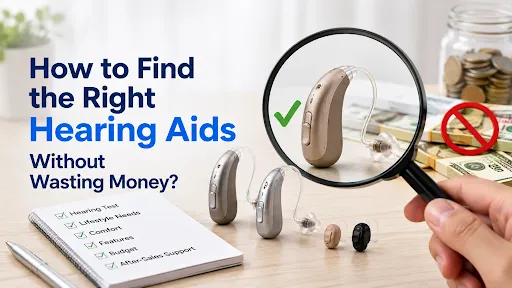
How to Find the Right Hearing Aids Without Wasting Money?
Aug
Buying a hearing aid can feel a lot like walking into a store without a price tag on anything. One person tells you to go for the cheapest option, another insists only the most expensive device will actually work, and somewhere in between, you are left wondering what you actually need. It is a confusing process, and honestly, a lot of people end up overspending on features they never use or underspending and ending up frustrated with a device that does not really help.
The good news is that finding the right hearing aids for your specific needs does not have to involve guesswork or wasted money. In this blog, we will walk through exactly how to choose the right hearing aids, break down real costs in India, and share practical tips to help you avoid the common mistakes that lead people to overspend or pick the wrong device altogether.
Summary
Choosing the right hearing aid is less about finding the most expensive or most advertised option and more about matching the device to your actual hearing loss, lifestyle, and budget. Hearing aid costs in India typically range from ₹25,000 to ₹800,000, and the right choice depends heavily on a proper hearing test rather than guesswork or peer pressure. Understanding what actually affects price, avoiding common buying mistakes, and asking the right questions before purchase can help you land on the best hearing aids for your needs without spending money on features you will never use.
Key Takeaways
- The best hearing aids are not always the most expensive ones; they are the ones matched to your specific hearing loss
- Hearing aid cost in India generally ranges from ₹25,000 to ₹800,000 depending on technology tier and features
- A proper hearing test is the single most important step before comparing prices or brands
- Overspending usually happens when buyers pay for features they will never actually use
- Underspending usually happens when buyers pick based on price alone without checking if it suits their hearing loss level
- Warranty, trial periods, and aftercare support matter just as much as the device itself
Table of Contents
Why Do People End Up Wasting Money on Hearing Aids?
Before getting into how to choose correctly, it helps to understand where people commonly go wrong.
- Buying based on price alone
Choosing the cheapest option without checking if it actually matches your hearing loss level often leads to poor results and a second purchase later
- Buying based on brand name alone
Assuming a popular brand automatically means the right fit, without checking the specific model’s features against personal needs
- Skipping the hearing test
Guessing hearing loss severity instead of getting it properly measured leads to picking devices that are either too weak or unnecessarily powerful
- Paying for unused features
Advanced features like real-time translation or fall detection are genuinely useful for some people, but unnecessary for others who end up paying extra without using them
- Ignoring aftercare costs
Some buyers focus only on the upfront price and later realise follow-up visits, repairs, or accessories add to the total cost
How to Choose the Right Hearing Aids: Step by Step
Here is a simple, practical approach to help you make a confident decision.
- Get a proper hearing test
This is the starting point for everything else. A certified audiologist will measure your hearing loss level in both ears separately, which determines what kind of amplification you actually need
- Identify your daily environment
Think about where you spend most of your time, whether that is a quiet home, a noisy workplace, frequent social gatherings, or a mix of everything
- List the features you genuinely need
Do you need Bluetooth streaming for calls, tinnitus support, or just clear amplification for conversations? Being specific helps avoid paying for extras you will not use
- Compare two or three brands within your budget
Rather than looking at every brand on the market, narrow it down to a few trusted options within your price range and compare them directly
- Ask about trial periods
A good provider will let you try the device in real-life situations before you commit to the full purchase
- Check warranty and aftercare details
Confirm how long the warranty lasts and what kind of follow-up support is included, since fine-tuning after fitting matters for long-term comfort
- Avoid pressure-driven decisions
Take your time, ask questions, and avoid being rushed into a premium tier you are unsure you actually need
Understanding Hearing Aid Cost in India
Knowing what actually drives the hearing aid cost helps you spend wisely instead of guessing. Here is a general breakdown by technology tier.
| Technology Tier | Approximate Price Per Device | What You Typically Get |
|---|---|---|
|
Basic tier |
₹25,000 to ₹60,000 |
Simple amplification, suited for mild hearing loss in quiet settings |
|
Mid-range tier |
₹60,000 to ₹150,000 |
Improved noise handling, rechargeable battery, moderate hearing loss support |
|
Advanced tier |
₹150,000 to ₹400,000 |
AI-based noise reduction, strong Bluetooth connectivity, tinnitus support |
|
Premium tier |
₹400,000 to ₹800,000 |
Full feature access, including translation, remote fine-tuning, and health tracking |
Since most people need support in both ears, the total cost is usually close to double the per-device price listed above. Ear Solutions offer combo pricing and EMI options for pairs, which can make the overall cost more manageable.
What Actually Determines If a Hearing Aid Is Worth the Price
- Severity of your hearing loss. More severe hearing loss generally requires higher amplification power, which affects the technology tier needed
- Noise environment. If you spend a lot of time in noisy places, AI-based noise reduction becomes genuinely useful rather than a nice-to-have
- Lifestyle needs. Frequent phone use, travel, or multilingual interactions may justify features like advanced Bluetooth streaming or translation
- Comfort and fit. A device that is comfortable enough to wear consistently is more valuable than one packed with features you avoid using because it feels uncomfortable
- Long-term support. A slightly higher upfront cost with strong aftercare support can be more valuable than a cheaper device with little to no follow-up help
Smart Tips to Avoid Wasting Money
- Always start with a hearing test before comparing prices, not after
- Ask your audiologist to explain exactly why a specific tier or model is being recommended for your case
- Avoid buying based on a single online review or a friend’s recommendation without your own hearing test
- Request a clear breakdown of what is included in the price, such as fitting, follow-up visits, and warranty
- Consider EMI or payment plan options if the ideal device is slightly above your immediate budget, rather than settling for a mismatched cheaper option
- Revisit your choice periodically, since hearing needs can change over time, and your device should be reassessed accordingly
Conclusion
Finding the best hearing aids without wasting money is not about chasing the lowest price or the most expensive model; it is about matching the right technology to your actual hearing loss, lifestyle, and budget. Understanding real hearing aid cost, avoiding common buying mistakes, and following a clear step-by-step process for how to choose the right hearing aids can save you both money and frustration in the long run. Visit Ear Solutions to know the transparent pricing and after-sales support features.
FAQs
The best way is a proper hearing test, which shows your exact hearing loss level and helps your audiologist recommend a technology tier that genuinely matches your needs rather than guessing.
Neither is automatically better. The right choice depends on your hearing loss severity and lifestyle, since paying for advanced features you will not use is just as wasteful as buying a device that is too weak for your needs.
Hearing aid costs in India generally range from ₹25,000 for basic models to ₹800,000 for premium-tier devices, depending on features and technology level.
Many providers, including Ear Solutions, offer trial periods so you can experience real-world performance before committing to a full purchase.
Common mistakes include skipping the hearing test, buying based on price or brand alone, ignoring aftercare costs, and paying for features that do not match their actual lifestyle.
Not necessarily. A higher price often means more advanced features, but the best hearing aids are the ones properly matched to your specific hearing loss and daily environment.
It is generally recommended to have your hearing reassessed every one to two years, since hearing needs can change over time and your device should be adjusted accordingly.

Prerna Singh
Audiologist, Ear Solutions
Prerna Singh is an Audiologist at Ear Solutions, focused on delivering compassionate, patient-centric hearing care. She works closely with individuals to understand their hearing concerns and guide them toward practical, technology-driven solutions that improve everyday communication and confidence.
At Ear Solutions, Prerna supports the organization’s long-standing mission of transforming lives through better hearing. She is committed to hearing awareness, accurate assessments, and continuous patient support-ensuring every individual receives the care they need to hear better and live better, in line with the vision of #AbSabSunenge.