

Audiometry Test
What Is a Pure Tone Audiometry Test? Complete Guide for Patients
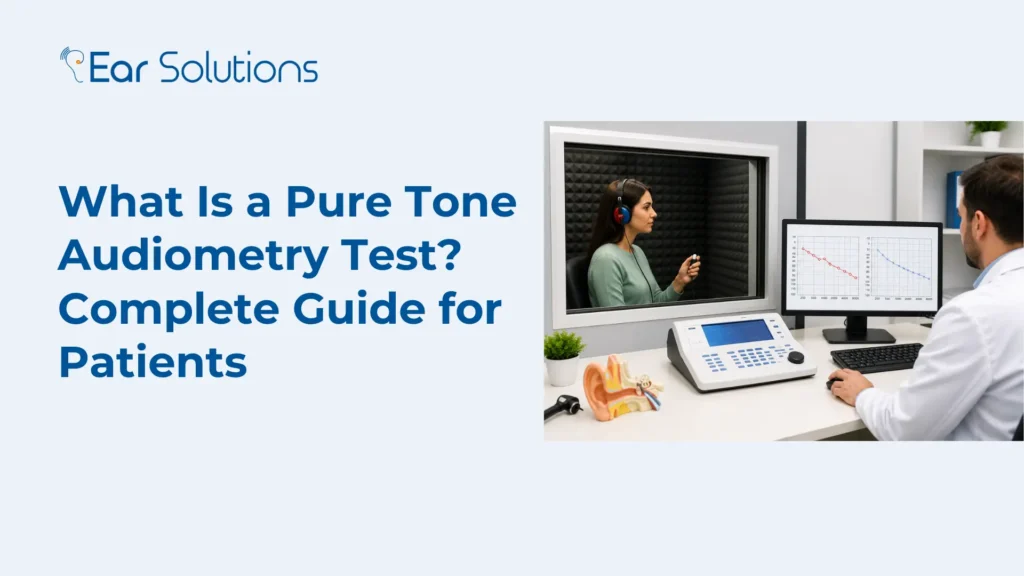
If your doctor has mentioned a pure tone audiometry test or you have started noticing that conversations feel harder to follow lately, you are probably wondering what this test actually involves. The good news is that it is one of the simplest and most painless hearing tests out there. This guide breaks it down in plain language so you know exactly what to expect before you walk into the clinic.
Summary
A pure tone audiometry test, often just called a PTA test, is the standard hearing test used by audiologists around the world. It measures the quietest sound you can hear at different pitches, from low rumbling tones to high-pitched beeps.
A PTA test for the ear is completely painless and usually takes less than thirty minutes. Results are plotted on a chart called an audiogram, which shows your hearing clearly and helps decide the next steps, including whether hearing aids might help.
Key Takeaways
- A pure-tone audiometry test checks how well you hear sounds at different pitches and volumes.
- The test is done using headphones in a quiet or soundproof room and involves no pain or discomfort at all.
- Results are shown on an audiogram, which is basically a simple graph of your hearing ability.
- The PTA test price is generally affordable, and many clinics offer it as part of a basic hearing evaluation.
- If the results show hearing loss, your audiologist can guide you toward the right hearing aids in Delhi based on your specific needs.
Table of Contents
What Is a Pure-Tone Audiometry Test?
A pure-tone audiometry test is a hearing check that measures the softest sound you can hear at various pitches. During the test, you wear headphones and listen for a series of beeps that change in pitch and volume. Every time you hear a sound, you raise your hand or press a button. This simple response tells the audiologist exactly how sensitive your hearing is across different frequencies, from deep low tones to sharp high tones.
It is considered the gold standard when it comes to a hearing test for hearing loss because it gives a clear, detailed picture rather than just a general yes or no answer.
Why Would Someone Need This Test
Most people go in for a PTA test for ear-related reasons, like struggling to follow conversations in noisy places, constantly turning up the television volume, or family members mentioning that they seem to miss what is being said. Sometimes it is simply part of a routine health check, especially for people above a certain age or those working in noisy environments for years.
Doctors also recommend this test after ear infections, sudden hearing changes, or ongoing exposure to loud noise, since early detection makes a real difference in managing hearing health.
How Does the Test Actually Work
The process is straightforward and does not involve any needles, machines touching your body, or discomfort of any kind. Here is what usually happens during the hearing test for hearing loss.
- You sit in a quiet room or a soundproof booth and wear a pair of headphones.
- The audiologist plays a series of tones, one ear at a time, starting from very soft sounds and gradually increasing the volume.
- You respond every time you hear a sound, even if it feels extremely faint.
- The same process is repeated for different pitches, moving from low-frequency tones to high-frequency ones.
In some cases, a bone conduction test is added, where a small vibrating device is placed behind the ear to check how sound travels through the bone rather than the air. The whole process usually takes between fifteen and thirty minutes, depending on how detailed the evaluation needs to be.
What Do the Results Actually Mean
Once the hearing test for hearing loss is done, your results are plotted onto a chart called an audiogram. This chart shows the softest volume you can hear at each pitch, and it helps the audiologist understand the type and pattern of your hearing loss, if any is present.
The audiogram also helps identify whether the loss is more noticeable in low pitches, high pitches, or spread evenly across the range, which matters a lot when deciding on the right kind of treatment or hearing aid in Delhi. Generally speaking, results are grouped into categories like normal hearing, mild, moderate, severe and profound hearing loss.
What Is the Usual PTA Test Price
The PTA test price varies depending on the clinic, the city, and whether it is bundled with additional evaluations like speech testing or tympanometry. In most cases, it remains quite affordable compared to other diagnostic hearing procedures, since it does not require any special equipment beyond a calibrated audiometer and headphones.
At Ear Solutions, certified audiologists perform PTA testing using calibrated diagnostic equipment to ensure accurate hearing assessment before recommending any treatment.
What Happens After the Test if Hearing Loss Is Found
If your results show some degree of hearing loss, the next step usually involves a detailed discussion with your audiologist about your lifestyle, the pattern of hearing loss shown on your audiogram, and what kind of support would help the most. This is often where the conversation shifts toward hearing aids in Delhi, since the city has a wide range of clinics offering different technology levels depending on budget and requirements.
Your audiologist will usually recommend trying a few models before deciding, since comfort and clarity can vary quite a bit from person to person, even with the same degree of hearing loss.
Why Getting Tested Early Makes a Real Difference
Hearing loss often develops so gradually that people do not notice it until it starts affecting daily conversations, work, or relationships. Getting a pure tone audiometry test done early means any changes can be caught sooner, giving you more options and a smoother adjustment period if hearing aids or other support become necessary.
It is a simple, painless step that takes very little time but can make a noticeable difference to your overall quality of life.
Conclusion
A pure tone audiometry test is one of the easiest and most important steps in understanding your hearing health. It is quick, painless, affordable, and gives a clear picture of exactly how your hearing is performing across different sounds.
Whether you are checking things out as a precaution or dealing with noticeable changes in your hearing, this test is usually the first and most useful step toward getting the right support, including finding the right hearing aid centre. You can visit Ear Solutions if searching for the best hearing aid centre in Delhi, because here we provide the best services and guidance with after-sales support from our team.
FAQs
Most tests take between fifteen and thirty minutes, depending on how detailed the evaluation is.
No, the test is completely painless and only involves listening to sounds through headphones.
Pricing varies by clinic and city, but it is generally an affordable and commonly available hearing test.
Yes, many clinics offer a child-friendly version of the test using simple visual or playful responses.
Not necessarily. Your audiologist will look at the full audiogram and your lifestyle before recommending hearing aids or any other treatment.

Prerna Singh
Audiologist, Ear Solutions
Prerna Singh is an Audiologist at Ear Solutions, focused on delivering compassionate, patient-centric hearing care. She works closely with individuals to understand their hearing concerns and guide them toward practical, technology-driven solutions that improve everyday communication and confidence.
At Ear Solutions, Prerna supports the organization’s long-standing mission of transforming lives through better hearing. She is committed to hearing awareness, accurate assessments, and continuous patient support-ensuring every individual receives the care they need to hear better and live better, in line with the vision of #AbSabSunenge.