

Hearing Aid, Hearing Care Tips
Why Professional Home Fitting Is Essential for Digital Hearing Aids
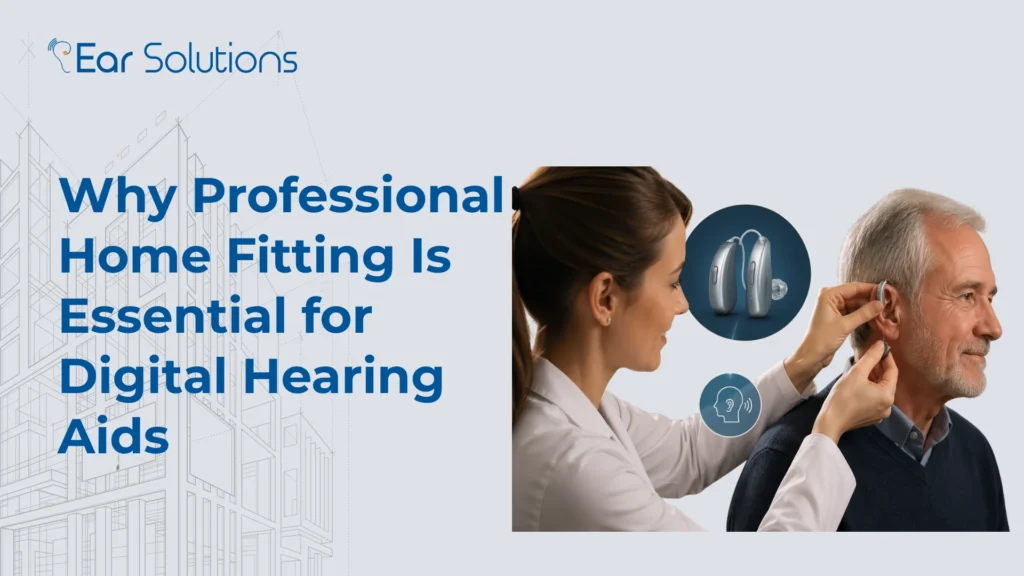
Most people spend weeks comparing phones, reading reviews, and watching unboxing videos before buying. But hearing aids? A quick Google search, maybe one clinic visit, and a decision made in under an hour.
It’s not carelessness. It’s that nobody explains the process properly. Hearing aids feel clinical and confusing, and most of the information out there reads like it was written by someone who just wants to close a sale.
So here’s a clear, no-nonsense breakdown of what actually matters, what digital hearing aids can do, how much they cost in India, and where to buy a hearing aid that will genuinely work for your life.
Summary
A practical, no-jargon guide to digital hearing aids in India, covering how they work, why professional fitting matters more than the device itself, what they cost in 2026, and how to choose the right audiologist over a salesperson.
KEY TAKEAWAYS
- A mid-range aid fitted properly outperforms a premium one sold without support.
- Many clinics skip it. Without it, fitting is based on averages, not your ears.
- An audiologist can programme for your hearing loss. A salesperson cannot.
- No hearing test means guesswork. Digital aids must be programmed to your audiogram.
- Patients who attend review visits are significantly happier with their results.
- Calibrating in your actual home reveals things a clinic booth never could.
Table of Contents
What Makes Digital Hearing Aids So Different From Older Ones?
Today’s digital hearing aids don’t just make sounds louder the way older analogue devices did. They actually process sound. They read the acoustic environment around you in real time, separate speech from background noise, adjust amplification across different frequencies based on your specific hearing loss, and do all of this without you touching a single button.
The best digital hearing aids available right now connect to your smartphone via Bluetooth. You can stream phone calls, music, and TV audio directly into your ears. Most come with a companion app that lets you tweak settings, check battery status, and switch between listening programmes for different environments. Some models use AI that learns your preferences over time and quietly adapts to how you live.
That’s genuinely impressive. But here’s the thing about impressive technology: it has to be set up correctly to actually deliver on its promise. And that’s where everything either comes together or falls apart.
Why Does Fitting Matter More Than the Device Itself?
Think of it this way. Imagine buying a beautifully tailored suit and never having it adjusted to your actual measurements. It might look fine on a hanger. On you, it pulls in the wrong places, bunches at the shoulders, and never quite feels like it belongs to you.
That’s exactly what happens when hearing aids are worn without proper fitting.
The device might be technically functional. But without being programmed specifically to your audiogram, your ear canal shape, your listening environments, and your daily routine, it will never perform the way it should.
This is the real reason so many people give up on hearing aids. Not because the technology failed them. Nobody took the time to set it up properly for them specifically.
A well-fitted digital hearing aid feels natural from day one. Voices sound like actual voices. Background noise doesn’t drown out conversation. Your own voice doesn’t echo strangely inside your head. These things don’t happen by accident. They happen because a qualified audiologist spent time calibrating the device to work with your ears and your brain, not just any ears in general.
What Actually Happens During a Professional Home Fitting?
Professional home fitting goes beyond what a standard clinic appointment can offer, and the difference is more significant than most people expect.
When the best audiologist in Delhi fits your hearing aid in your actual home, they can see how the device performs in the spaces where you actually spend your time. The acoustics of your living room are completely different from those of a soundproofed clinic booth. The background noise from your kitchen, the distance between your chair and the television, the way voices carry down your hallway, these real-world details reveal things that no clinical environment ever could.
What are the main steps in professional home fitting?
The process begins with a thorough review of your audiogram and a genuine conversation about your daily life. Not a checklist run through in five minutes. A real conversation. Where do you struggle the most? Is it following family conversations at the dinner table? Catching what people say on the phone? Watching television with others? Do you live alone or in a busy household? Are you still working, or mostly at home?
From there, the best audiologist in Delhi programs the hearing aid using specialist software, setting amplification levels across different sound frequencies to precisely match your hearing loss. The fitting is then verified using real ear measurement, a clinical technique that confirms the sound actually reaching your eardrum matches the targets set for your specific hearing profile.
Many clinics skip real ear measurement because it takes time and requires specialist equipment. It should never be skipped.
The home environment also allows for fine-tuning that makes a real difference in daily comfort. Settings are adjusted based on how the device actually behaves in your space, not how it performs in a controlled room that looks nothing like where you actually live.
At Ear Solutions, every home fitting follows this process, because shortcuts in fitting always show up later in how well the hearing aid actually works.
How Much Do Digital Hearing Aids Actually Cost in India in 2026?
After understanding the next point is what the prices of the hearing machine depend on? Prices vary quite a bit depending on the technology level, brand, and what the package includes. Here’s an honest picture:
- Entry-level digital hearing aids typically fall between ₹15,000 and ₹35,000 per device. These handle basic digital processing and perform reasonably well in quieter listening environments. A solid starting point for mild to moderate hearing loss in straightforward daily situations.
- Mid-range digital hearing aids usually run from ₹35,000 to ₹80,000 per device. This is where you start getting meaningful noise management, Bluetooth connectivity, rechargeable battery options, and app control. Most people find that this range delivers a genuine, noticeable improvement in daily life.
- Premium digital hearing aids range from ₹80,000 up to around ₹2,00,000 per device. At this level you’re getting advanced AI processing, seamless smartphone integration, automatic environment detection, and significantly better speech clarity in demanding listening situations like busy restaurants, family gatherings, or crowded offices.
But here’s what matters as much as the price tag, what’s actually included in the package. A mid-range hearing machine with proper fitting, follow-up care, and adjustment visits will often outperform a premium device sold with no real support around it.
Before you buy, always ask the clinic directly: How many follow-up visits are included? Is real ear measurement part of the fitting? What does the warranty actually cover? These questions matter far more than the brand name on the box.
Where Should You Actually Go to Buy a Hearing Aid?
When you’re searching for where to buy a hearing aid, or looking for the best audiologist in Delhi, this one question cuts through everything: are you talking to a qualified audiologist or a salesperson?
They are not the same thing, and the difference has a direct impact on your outcome.
A salesperson can show you devices, quote prices, and process your payment. An audiologist can assess your hearing properly, explain what your audiogram means in plain language, recommend the right technology level for your specific hearing loss, and fit the device using clinical tools that verify the result. One of these outcomes leads to a hearing aid that changes your life. The other leads to one that ends up in a drawer.
When you're deciding where to buy a hearing aid, here's what to actually look for:
When choosing a hearing aid provider, here’s what to actually look for:
- A qualified audiologist on staff, not just product consultants focused on sales targets.
- A genuine free trial period of at least 15–30 days so you can test the device in your daily life before committing.
- Clear transparency about what follow-up care and services are included in the price.
- A consultation approach that focuses on your lifestyle needs, not just pushing the most expensive option.
- Whether the provider truly understands your daily challenges and hearing requirements.
Ear Solutions hearing aid clinics across India have experienced audiologists who specialize in fitting digital hearing aids for all levels of hearing loss. They also offer professional home fitting services when needed, with a process designed around individual needs rather than a fixed product catalogue.
What Are the Most Common Fitting Mistakes People Make?
The number of people who buy hearing machines and quietly stop wearing them within six months is higher than most clinics will tell you. Here’s why it happens and, more importantly, how to avoid it.
- Buying without a hearing test first is the single most common error. Digital hearing aids need to be programmed to your audiogram. Without one, any device you buy is essentially a guess. It might help a little, but it will never be precisely right for your ears.
- Skipping real ear measurement is the second. This step gets left out far more often than it should, simply because it takes time and requires specialist equipment. But it’s the only way to confirm that what the device delivers actually matches what your hearing needs. Without it, the fitting is based on population averages, which may or may not apply to you.
- Missing follow-up appointments is the third, and often the costliest mistake in terms of results. The first few weeks with hearing devices are an adjustment period. Your brain needs time to relearn sounds it hasn’t processed properly in years. The fine-tuning that happens at review visits is often what turns an acceptable result into one that genuinely transforms how you move through the world. Patients who show up consistently for follow-ups end up significantly happier with their hearing machines than those who don’t.
Conclusion:
Digital hearing aids in 2026 are genuinely remarkable technology. But technology only delivers on its promise when it’s set up properly for the person wearing it. A hearing aid fitted professionally, followed up consistently, and adjusted based on real feedback from your life is a completely different experience from one that’s simply handed over in a box.
If you’re considering digital hearing aids in India, start with a proper hearing test. Find a hearing aid shop where qualified audiologists are actually doing the work. Ask about home fitting options, trial periods, and what aftercare is included. And don’t let price alone drive the decision.
The right hearing aid, fitted the right way, changes daily life in ways that are genuinely hard to describe until you’ve experienced it yourself.
FAQs
Yes. Ear Solutions offers professional home fitting services across multiple cities in India. Contact your nearest clinic to check availability in your specific area.
A thorough initial fitting typically takes around sixty to ninety minutes. Follow-up appointments are usually shorter, around thirty to forty-five minutes; but they’re just as important to attend.
Technically yes, but it’s strongly discouraged. Without a proper hearing test and professional programming, you’re unlikely to get results anywhere close to what the device is actually capable of delivering.
Most people benefit from a review every six to twelve months. If your hearing changes noticeably in between, reprogramming may be needed sooner.
It depends entirely on the clinic. Always ask specifically what is included before purchasing. A package that covers fitting, real ear measurement, and follow-up appointments is always better value than a lower headline price with no support around it.

Prerna Singh
Audiologist, Ear Solutions
Prerna Singh is an Audiologist at Ear Solutions, focused on delivering compassionate, patient-centric hearing care. She works closely with individuals to understand their hearing concerns and guide them toward practical, technology-driven solutions that improve everyday communication and confidence.
At Ear Solutions, Prerna supports the organization’s long-standing mission of transforming lives through better hearing. She is committed to hearing awareness, accurate assessments, and continuous patient support-ensuring every individual receives the care they need to hear better and live better, in line with the vision of #AbSabSunenge.